A link shortener is a tool that converts long, unwieldy URLs into short, manageable links designed to simplify sharing and enable tracking and marketing analytics. Also called a URL shortener, this technology sits at the centre of modern digital marketing, giving social media managers, email marketers, and performance teams precise control over how links behave after they are clicked. Beyond simple shortening, today’s best link shortener services function as full redirect engines that collect click data, route users by location or device, and power attribution models across paid and organic campaigns.
What is a link shortener, and how does it technically work?
A link shortener stores the original URL against a unique short code in a database, then redirects every incoming click to the destination using an HTTP status code. The process takes milliseconds, but those milliseconds carry significant marketing value.
Here is the exact flow from click to destination:
- A user clicks the short link. The request hits the shortener’s server, which reads the short code from the URL path.
- The server looks up the short code. It finds the matching long URL in its database.
- The server issues an HTTP redirect. Either a 301 (permanent) or 302 (temporary) response sends the browser to the destination.
- Analytics data is captured. During the redirect phase, the server logs the user’s IP address, device type, browser, language, and location.
- The user arrives at the destination. The entire process is invisible to the visitor.
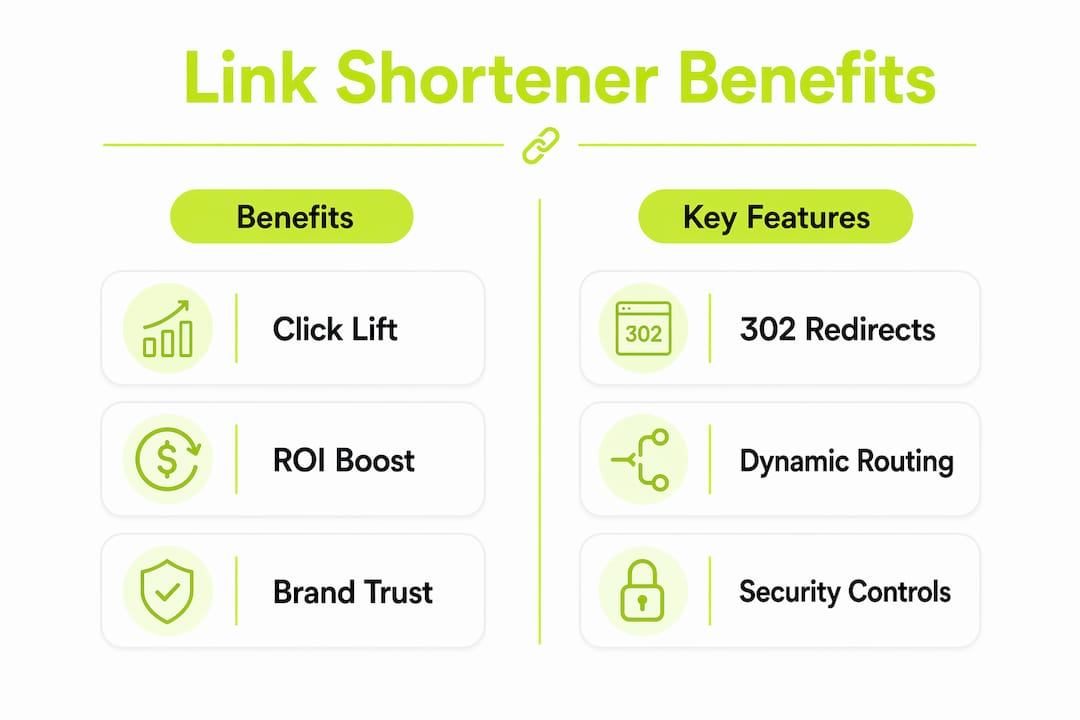
The choice between 301 and 302 redirects matters more than most marketers realize. 302 redirects are tracked reliably because browsers do not cache them. A 301 redirect, by contrast, tells the browser to permanently remember the destination. After the first visit, the browser skips the shortener entirely, which means subsequent clicks go unrecorded. For marketing analytics, 302 is the correct default.
Pro Tip: Always confirm that your link shortener uses 302 redirects by default if click-tracking accuracy is a priority. Some entry-level tools default to 301 redirects for SEO reasons, silently breaking your analytics after the first visit.

Security is a real concern with generic shorteners. Because the destination URL is hidden, bad actors use short links to disguise phishing pages and spam. Reputable platforms address this with destination scanning and abuse reporting, but the risk is real enough to factor into your tool selection.
What are the primary benefits of using link shorteners for marketing?
The benefits of link shorteners go well beyond making URLs look cleaner. Short links directly affect click-through rates, brand perception, and the quality of your campaign data.
Key benefits for digital marketers and social media managers include:
- Improved click-through rates on character-limited platforms. Short links improve shareability on Twitter, SMS, and messaging apps where long URLs consume valuable space and look unprofessional.
- Brand recognition through custom domains. A branded short link like
go.yourbrand.com/salesignals legitimacy. Branded short links receive roughly 34% more clicks than generic ones because users trust the source before they click. - Granular click analytics. Every click generates data: device type, browser, country, city, and time of day. That data feeds directly into audience segmentation and campaign refinement.
- Geo-targeting and device routing. A single short link can send mobile users to an app store and desktop users to a landing page, or route French visitors to a French-language page automatically.
- A/B testing at the link level. Some platforms split traffic between two destinations, letting you test landing pages without changing your ad creative.
- Attribution modeling for paid campaigns. The redirect phase enables attribution before the user even reaches your site, giving you cleaner data than UTM parameters alone.
The 34% click lift from branded links is not a minor gain. For a campaign generating 10,000 clicks on a generic short link, switching to a branded domain could mean 3,400 additional visits with zero additional ad spend. That math alone justifies the upgrade from a free generic tool to a branded solution.
Marketing analytics drives measurably better ROI when the data is clean and complete. Link shorteners, when used correctly, are among the most direct ways to close the gap between a click and a conversion in your attribution stack.
How to choose the right link shortener features
Choosing between link shortener options comes down to four factors: domain type, redirect behavior, routing capabilities, and security reputation.
Generic domains vs. branded domains
Generic short domains are shared infrastructure. Hundreds of thousands of other users send links through the same domain, which means one spammer can get the entire domain blacklisted. Custom branded domains prevent email gateways from flagging your links as spam, protecting both deliverability and brand trust. Marketing experts treat custom branded domains as best practice for converting a link shortener from a simple utility into a trackable marketing asset.
Redirect type and its tracking impact
| Redirect type | Cached by browser | Tracks every click | Best use case |
|---|---|---|---|
| 301 Permanent | Yes | No, after first visit | SEO redirects, permanent moves |
| 302 Temporary | No | Yes, every time | Marketing analytics, campaign tracking |
The HTTP redirect type directly impacts how accurately clicks are recorded. For any campaign where click volume matters, 302 is the only defensible choice.
Dynamic routing capabilities
Modern shorteners include dynamic routing engines that inspect each incoming click and route it based on device type, language, or geographic location. Dynamic routing engines route clicks by device, language, or location to improve user experience and conversions from a single short URL. A Shopify merchant running a global campaign, for example, can send U.S. visitors to a USD pricing page and U.K. visitors to a GBP page, all from one link.
Pro Tip: Before committing to any link shortener platform, test its routing logic with a VPN. Set your location to a country you target and confirm the redirect lands where you expect. Routing bugs are common and invisible until a campaign is already live.
Security and reputation
Avoid generic shorteners for email campaigns. The shared domain reputation problem means your links may be blocked by spam filters before your audience ever sees them. A dedicated branded domain eliminates this risk entirely and adds a layer of professionalism that generic tools cannot match.
Practical applications for link shorteners in digital campaigns
Knowing how a link shortener works is one thing. Knowing where to deploy it in your marketing stack is what separates average campaigns from high-performing ones.
Social media managers get the most immediate value. Platforms like Instagram, LinkedIn, and X enforce character limits and penalize links that look untrustworthy. A clean branded short link fits naturally in a bio, caption, or story, and every click feeds back into your analytics dashboard. The link shortener for social media use case is now a standard part of any professional content calendar.
Best practices for campaign use:
- Use one short link per campaign asset. Assign a unique short link to each ad, email, or post so you can isolate performance by channel without relying solely on UTM parameters.
- Pair short links with UTM codes. Short links and UTM parameters work together. The short link captures raw click data; the UTM code passes campaign context into Google Analytics or your attribution platform.
- Monitor domain reputation monthly. Check whether your branded domain appears on any spam blacklists. One compromised link can damage deliverability across your entire email list.
- Rotate links for retargeting. Attach retargeting pixels to your short links so every click automatically adds the visitor to a Meta, TikTok, or Pinterest audience. This turns every shared link into a list-building tool.
- Avoid link overuse in a single message. Emails with too many short links trigger spam filters. Limit short links to two or three per email and place them in high-visibility positions.
The retargeting pixel use case is where link shorteners move from useful to genuinely powerful. A social media manager sharing a product link on Pinterest can build a retargeting audience from every click, even if the visitor never reaches the website or completes a purchase. That audience is then available for follow-up ads across Meta and TikTok. Link retargeting through short links is one of the most underused tactics in mid-market digital marketing.
Key Takeaways
A link shortener is a redirect engine that captures click data, routes users dynamically, and builds marketing audiences, making it far more valuable than its name suggests.
| Point | Details |
|---|---|
| Core function | Short links store a long URL and redirect clicks using HTTP 301 or 302 codes. |
| Use 302 for tracking | 302 redirects record every click; 301 redirects are cached and miss repeat visits. |
| Branded links outperform | Branded short links receive roughly 34% more clicks than generic alternatives. |
| Dynamic routing adds value | One short link can route users to different destinations based on device, language, or location. |
| Retargeting pixels multiply reach | Attaching pixels to short links builds ad audiences from every click, not just site visits. |
Link Squeeze Makes Every Link Work Harder
Link Squeeze is built for marketers who want more from their short links than a smaller character count. The platform lets you attach Meta, TikTok, and Pinterest retargeting pixels to every link you share, turning each click into an audience-building event. Branded short links, geo-targeting, and detailed click analytics are all included, so you get the full picture of who clicked, from where, and on what device.
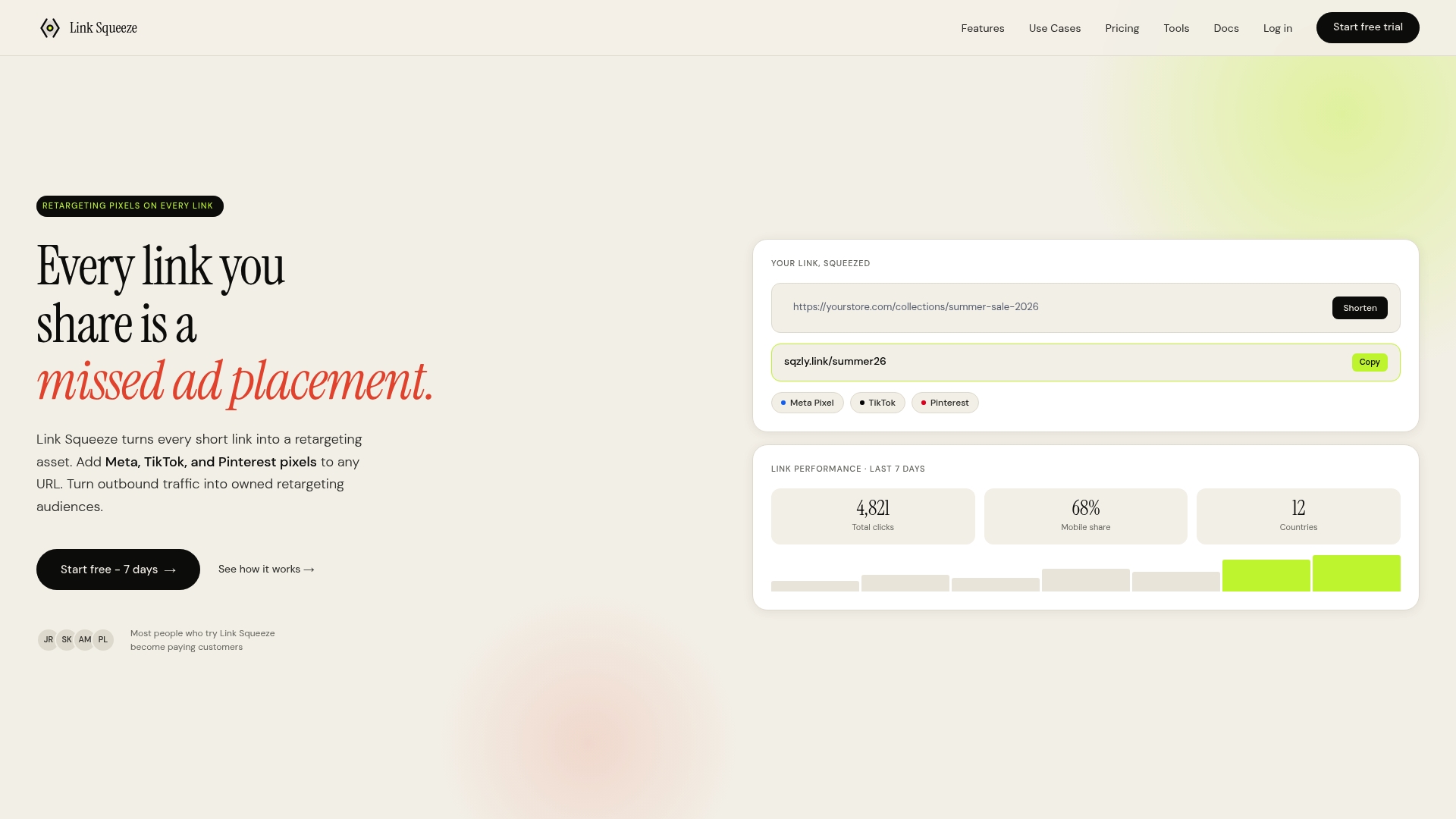
Shopify merchants get direct order attribution through native integration, which removes the guesswork from campaign reporting. Social media managers can access purpose-built tools designed around the way content teams actually work. If you want to start with no commitment, the free link shortener gives you branded links and click tracking from day one.
FAQ
What is a link shortener used for?
A link shortener converts long URLs into short links that are easier to share and track. Marketers use them to measure click performance, route users by location or device, and build retargeting audiences.
Can link shorteners track clicks?
Yes. Link shorteners capture click data including device type, location, browser, and time during the redirect phase. Using 302 redirects ensures every click is recorded accurately.
What is the difference between a 301 and 302 redirect in a link shortener?
A 301 redirect is permanent and gets cached by browsers, which means repeat clicks are not tracked. A 302 redirect is temporary and not cached, so every click registers in your analytics.
Are free link shortening tools good enough for marketing?
Free tools work for basic shortening, but they typically use generic shared domains that carry spam reputation risks. Branded short links on a dedicated domain deliver better trust, higher click rates, and cleaner analytics.
How does a link shortener help with social media marketing?
Short links fit character limits on platforms like X and Instagram, look more professional in captions and bios, and feed click data directly into campaign dashboards. Attaching retargeting pixels to social links also builds ad audiences from every share.