A link management tool is a digital platform that centralizes the creation, customization, tracking, and monitoring of marketing links across every channel you use. Without one, your campaign data fragments across spreadsheets, email threads, and disconnected analytics dashboards. Digital marketers and e-commerce professionals who rely on manual link processes consistently face misattributed traffic, broken backlinks, and reporting gaps that distort ROI calculations. The right link tracking software turns every URL into a measurable asset, giving you clean data to act on instead of noise to sort through.
What does a link management tool actually do?
A link management tool processes URLs by filtering, parsing, and storing them systematically for efficient retrieval and analysis. That technical foundation supports every practical feature marketers rely on daily. Think of it as the control center for your entire link ecosystem, from the short link in your Instagram bio to the UTM-tagged URLs inside your email campaigns.
The core features you should expect from any link management platform include:
- Link creation and shortening. Branded short links with custom domains replace generic URLs and reinforce brand recognition at every touchpoint. Link Squeeze supports branded link shortening with custom domains, so every link you share carries your brand identity.
- UTM parameter management. Automated UTM tagging enforces consistent naming conventions across your team. This prevents the parameter drift that creates unattributable “dark traffic” in your analytics reports.
- Backlink monitoring. Modern backlink monitoring tools perform scheduled crawls to detect status, anchor text, and attribute changes with immediate email alerts. You know the moment a do-follow link flips to no-follow or disappears entirely.
- Real-time click analytics. Dashboards showing clicks by device, geography, referral source, and time of day let you adjust campaigns while they are still running, not after the budget is spent.
- Governance and taxonomy enforcement. Enterprise-grade platforms enforce mandatory tagging rules at the point of link creation, so no URL leaves your system without the correct campaign metadata attached.
- Integration with analytics platforms. Direct connections to GA4 and Adobe Analytics mean your link data flows into your existing reporting without manual exports or data reconciliation.
Pro Tip: Set up mandatory UTM fields in your link management software before your team creates a single campaign URL. Fixing parameter inconsistencies retroactively is far more costly than preventing them upfront.
Advanced platforms also offer bulk URL generation with template application and conditional fields, which is critical when you are launching multi-channel campaigns with dozens of unique tracking variants.

How do link management tools improve marketing attribution?
Misattributed traffic is the silent budget killer in digital marketing. Inconsistent UTM tagging causes significant “dark” or misattributed traffic, and enforcing standard naming conventions before link generation is the top expert recommendation for fixing it. When sessions land in your analytics as “direct” instead of “email” or “paid social,” you lose the ability to credit the right channel and make accurate budget decisions.
A link management platform solves this through four concrete mechanisms:
- Mandatory UTM governance at creation. The platform blocks link generation unless all required parameters are filled in correctly. No more missing
utm_mediumvalues or inconsistentutm_campaignspellings across team members. - Automated link monitoring to prevent link decay. Backlink status changes such as 301 redirects, 404 errors, or status code flips are tracked systematically. Alerts arrive with full details so you can take corrective action before rankings or referral traffic drop.
- Standardized campaign metadata. Standardizing campaign metadata through link management tools reduces resource costs and operational errors in marketing teams. Fewer errors mean cleaner reports and faster decisions.
- Retargeting pixel integration. Platforms like Link Squeeze attach retargeting pixels directly to short links, converting every click into audience data. That means even outbound traffic to third-party sites builds your retargeting pool.
Pro Tip: Run a UTM audit on your last three months of campaign links before migrating to a new platform. Identifying your most common tagging errors tells you exactly which governance rules to enforce first.
Clean attribution data changes how you allocate budget. When you can see that your email campaign drove 40% of conversions but your paid social drove only 12%, you reallocate with confidence rather than guesswork. That is the practical ROI of getting link management right.
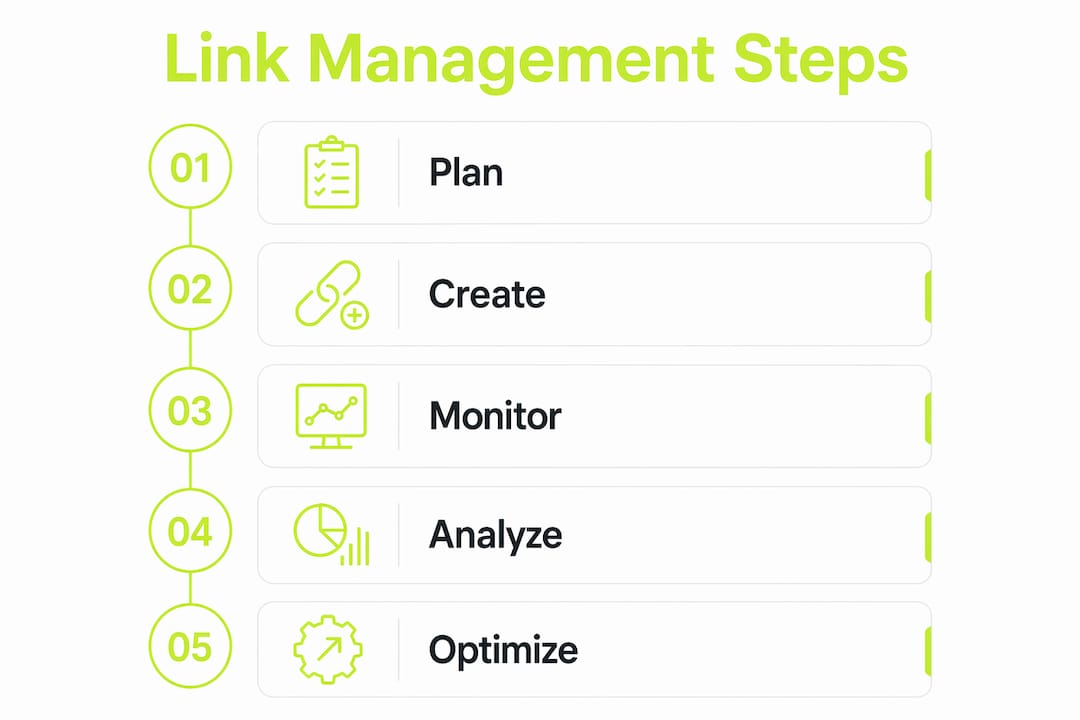
Best practices for implementing link management tools effectively
The biggest mistake marketers make is treating a link management platform as a URL shortener and nothing more. The full value comes from the governance layer, not just the creation features.
Start with these practices before your team touches the platform:
- Establish naming conventions upfront. Define your UTM taxonomy before anyone creates a link. Document the approved values for
utm_source,utm_medium, andutm_campaignand make that document the single source of truth. - Centralize all link creation. When team members create links outside the platform, you lose governance. Make the link management tool the only approved method for generating campaign URLs.
- Schedule regular backlink checks. Proactive monitoring is the only reliable way to catch disappearing or degraded backlinks before they damage your SEO profile. Set automated crawls to run weekly at minimum.
- Train every team member on the protocol. A governance system only works when everyone follows it. Run a short onboarding session when new team members join and document the process in your marketing wiki.
- Use automated alerts for broken links. Configure your platform to send immediate notifications when a link returns a 404 or changes status. A broken link in a live email campaign can cost you conversions for days if you catch it manually.
- Apply bulk generation and templates for scale. Advanced platforms allow marketers to automate URL building with error checking and consistency enforcement. Use templates for recurring campaign types so you never rebuild the same structure from scratch.
Pro Tip: Create a “link request” process for campaigns that fall outside your standard templates. A short approval step catches errors before they go live and reinforces the habit of using the platform correctly.
The teams that get the most from link management software are the ones that treat it as a workflow standard, not an optional tool. Adoption drives the data quality that makes every downstream report more reliable.
What challenges do link management tools solve?
Digital marketers face a specific set of recurring problems that manual processes cannot fix at scale. The table below maps the most common challenges to the solutions a link management platform provides.
| Challenge | Impact | Solution |
|---|---|---|
| Link rot and disappearing backlinks | Silent SEO ranking loss and referral traffic drops | Scheduled crawls with automated status alerts |
| Inconsistent UTM parameters | Dark traffic and broken attribution in analytics | Mandatory governance rules enforced at link creation |
| Multi-channel campaign tracking | Fragmented data across platforms with no unified view | Centralized link creation with integrated analytics |
| Manual monitoring inefficiencies | Human error, delayed responses, and wasted team hours | Automated crawl reports and real-time alerting |
| Poor integration with analytics tools | Double-entry, data gaps, and reconciliation errors | Native connections to GA4 and Adobe Analytics |
Without monitoring, paid or earned backlinks can degrade silently, risking search rankings and traffic. That risk is especially high for e-commerce brands where a single high-authority backlink may drive consistent referral revenue month over month. Losing it without knowing means losing that revenue without understanding why.
The multi-channel tracking problem is equally serious. A campaign running across email, paid search, organic social, and influencer placements generates dozens of unique URLs. Without a centralized link management platform, tracking those variants accurately is practically impossible. Errors compound quickly, and by the time you review the data, the campaign is over.
Key Takeaways
A link management tool delivers its full value only when governance, monitoring, and attribution work together as a system, not as separate features.
| Point | Details |
|---|---|
| Governance drives attribution accuracy | Mandatory UTM rules at link creation eliminate dark traffic and misattributed sessions. |
| Backlink monitoring prevents silent losses | Scheduled crawls catch status changes before they damage SEO rankings or referral traffic. |
| Centralized creation reduces errors | One platform for all link generation enforces consistency and removes manual mistakes. |
| Retargeting pixels extend link value | Attaching pixels to short links turns every click into audience data for future campaigns. |
| Bulk generation scales campaigns | Templates and automated URL building keep large multi-channel campaigns consistent and fast. |
Why governance matters more than the tool itself
After years of watching marketing teams adopt link management platforms, the pattern is clear. The teams that see the biggest gains are not the ones using the most feature-rich software. They are the ones that built a governance culture before they picked a tool.
UTM governance experts advise that the rules around parameter naming are more critical than the platform itself for effective campaign tracking. I have seen teams with enterprise-grade software still drowning in dark traffic because no one enforced a naming convention. And I have seen lean teams with basic platforms produce spotless attribution data because they treated the taxonomy as non-negotiable.
The other shift I would push for is treating backlink monitoring as an ongoing process, not a quarterly audit. Industry professionals consistently highlight that monitoring disappearing or altered backlinks is a key factor in sustaining long-term SEO value. A link you earned six months ago can flip to no-follow tomorrow. If you are not watching, you will not know until your rankings tell you.
The future of link management is moving toward automated integrity checks and AI-driven anomaly detection. But the marketers who will benefit most from those advances are the ones who already have clean data and consistent processes. You cannot automate your way out of a governance problem. Fix the foundation first.
Link Squeeze gives you the tools to manage links at scale
Link Squeeze is built for digital marketers and e-commerce professionals who need more than a basic URL shortener. It combines branded short links, a free UTM builder, retargeting pixel integration, and deep click analytics into one platform.
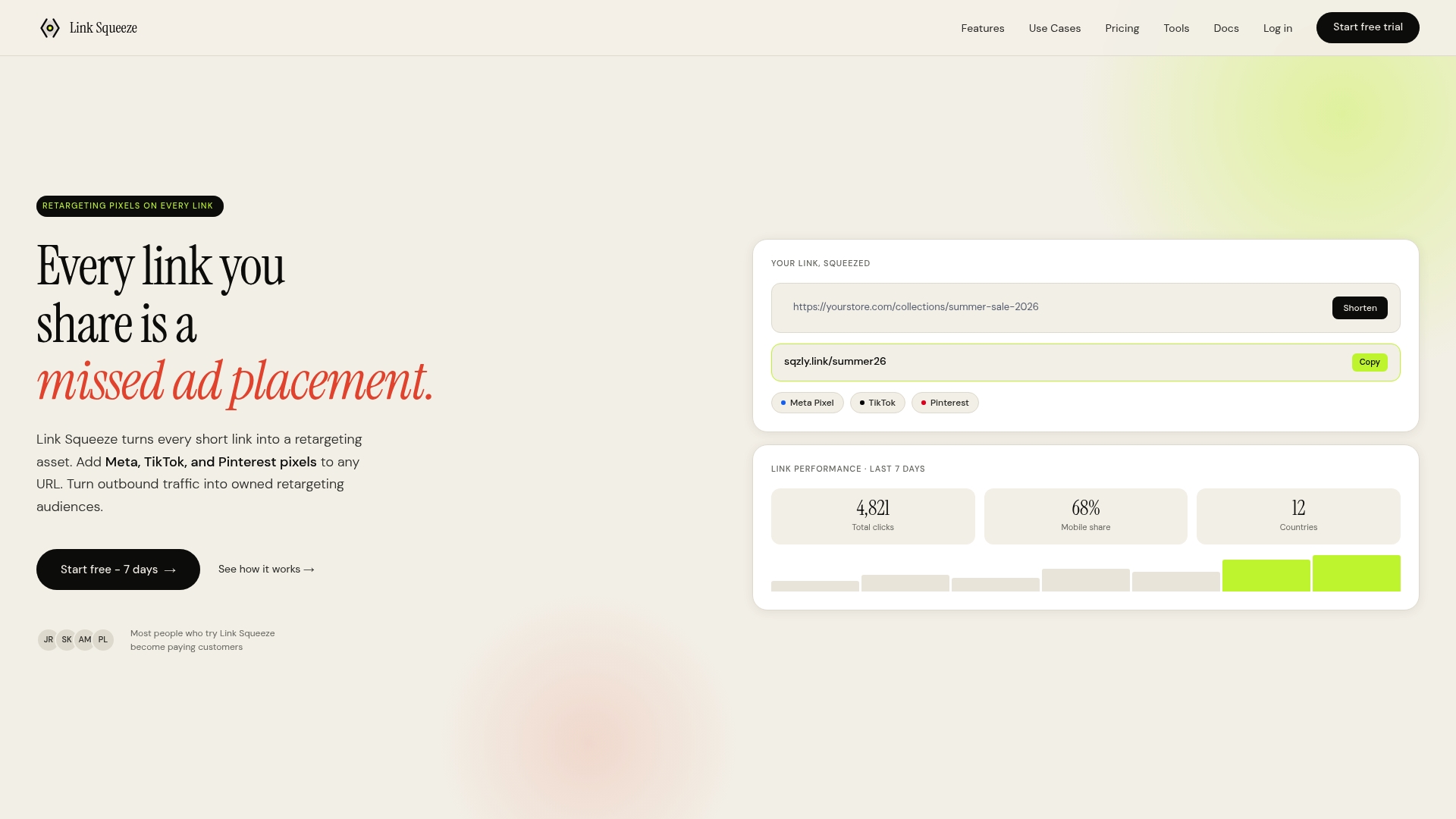
Shopify merchants get accurate order attribution through native integration, turning every outbound link into a trackable revenue event. The link retargeting features convert clicks on any link, including links to third-party content, into retargeting audiences you own. If you want to see how Link Squeeze handles link governance and campaign tracking for your team, explore the full platform and start with the free tools today.
FAQ
What is a link management tool?
A link management tool is a platform that centralizes the creation, tracking, and monitoring of marketing URLs. It enforces UTM governance, shortens links with branded domains, and provides real-time click analytics across campaigns.
Why does UTM governance matter for link management?
Inconsistent UTM parameters cause dark traffic and broken attribution in analytics reports. Enforcing mandatory naming conventions at the point of link creation is the most effective way to maintain clean, attributable campaign data.
How does backlink monitoring fit into link management?
Backlink monitoring uses scheduled crawls to detect changes in link status, anchor text, and rel attributes. Automated alerts notify you immediately when a backlink is removed or flips from do-follow to no-follow, so you can act before SEO rankings drop.
What features should I prioritize in link management software?
Prioritize UTM governance enforcement, real-time click analytics, backlink status monitoring, branded link shortening, and native integration with your analytics platform such as GA4 or Adobe Analytics.
How does Link Squeeze support e-commerce link management?
Link Squeeze offers Shopify integration for accurate order attribution, attachment of a retargeting pixel to any short link, and support for branded custom domains, giving e-commerce teams full visibility into how links drive revenue.